Seminars
A practical optimisation algorithm for big data applications
September 2017. NUS mathematicians have proposed improvements to a well-known optimisation algorithm to significantly boost its computational efficiency.


September 2017. NUS mathematicians have proposed improvements to a well-known optimisation algorithm to significantly boost its computational efficiency.
Event Spectrum Estimation for High-Dimensional Time Series with Applications Professor Debashis Paul University of California, Davis Date: 13 September 2017, Wednesday Location: S16-06-118,
Event An Introduction to Stochastic Filtering and Optimal Control Dr Zhang Shuaiqi Department of Statistics and Applied Probability, NUS Date: 06 September 2017, Wednesday

August 2017 – NUS statisticians have developed a better methodology to study user behaviour for freemium products and services.
Event Generating Long-Term Wind Scenarios Condtioned on Sequential Short-Term Forecasting Using LTM Mr Kyle Perline School of Civil & Environmental Engineering, Cornell University Date:
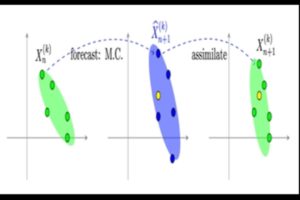
July 2017 – NUS mathematician has revealed ways which can lead to more accurate weather predictions.
Event Modeling disease propagation in networks: Source-finding and influence maximization Professor Po-Ling Loh University of Wisconsin, Madison Date: 03 July 2017, Monday Location:
Event Homotopy theory of complete Lie algebras Prof Michel Waldschmidt Université Pierre et Marie Curie Paris 6 Date: 26 June 2017, Monday Location:
Event Statistically and Numerically Efficient Independence Test Prof Gang Li Department of Biostatistics and Biomathematics, University of Los Angeles at California Date: 08 June
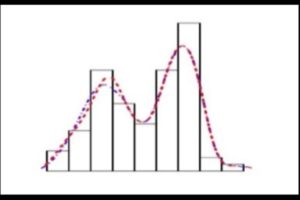
February 2017 – NUS mathematicians have developed effective methods for modelling real-life problems with monotone density ratio conditions.
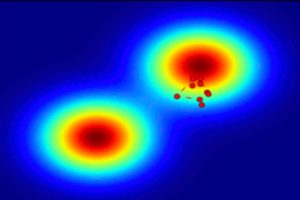
February 2017 – NUS statisticians have gained insights which allow for better prediction of physical phenomena.
Event Topic-Adjusted Visibility Metric for Scientific Articles Dr Tan Siew Li, Linda Department of Statistic and Applied Probability, NUS Date: 15 February 2017, Wednesday
Event How the Swine Flu Epidemic Spread: Understanding the Data with an Equilibrium Vigilance Model A/Professor Jussi Keppo Department of Decision Sciences, NUS Business School
Event Estimating Causal Effects via Joint Confounder Selection and Balancing A/Professor Li Bo Department of Management Science and Engineering Date: 06 February 2017, Monday
Event Adaptation in Shape Constrained Regression A/Professor Bodhisattva Sen Columbia University Date: 25 January 2017, Wednesday Location: S16-06-118, DSAP Seminar Room Time: 04:00pm
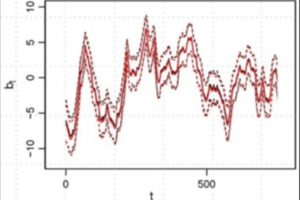
January 2017 – NUS statisticians have developed a method to estimate unknown parameters efficiently for modelling complex situations.
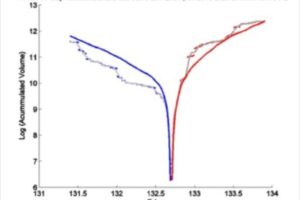
January 2017 – NUS statisticians have developed adaptive functional time series models that improve the forecast accuracy of complex data.
Event Models for Spatial and Spatio-Temporal Stochastic Volatility Ms Michele Nguyen Imperial College London, UK Date: 11 January 2017, Wednesday Location: S16-06-118, DSAP
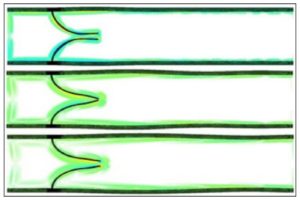
November 2016 – NUS mathematicians have developed an efficient and stable numerical method to solve fluid structure interaction problems involving large convections of fluid and near-contact of structures.
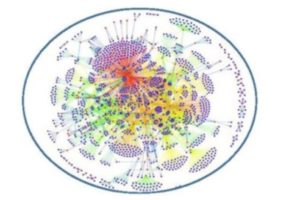
November 2016 – NUS mathematicians have developed an unbiased and consistent estimator for counting motifs (patterns) of gene regulatory relationships.